
July 4, 2026
How to Start a Jam on Spotify Without Losing Control of the Queue
Table of contents
- Table of contents
- Quick answer for how to start a Jam on Spotify
- Official Spotify sources for how to start a Jam on Spotify
- How to handle how to start a Jam on Spotify safely
- how to start a Jam on Spotify mistakes and limits
- Safety and legal use
- how to start a Jam on Spotify comparison table
- how to start a Jam on Spotify FAQ
- Final checklist
To start a Spotify Jam, open a song or playlist in Spotify, use the device or session menu, choose Jam, then invite people with the available link, QR code, Bluetooth, or local sharing option. Keep control by watching who can add songs and ending the Jam when the shared listening session is over.
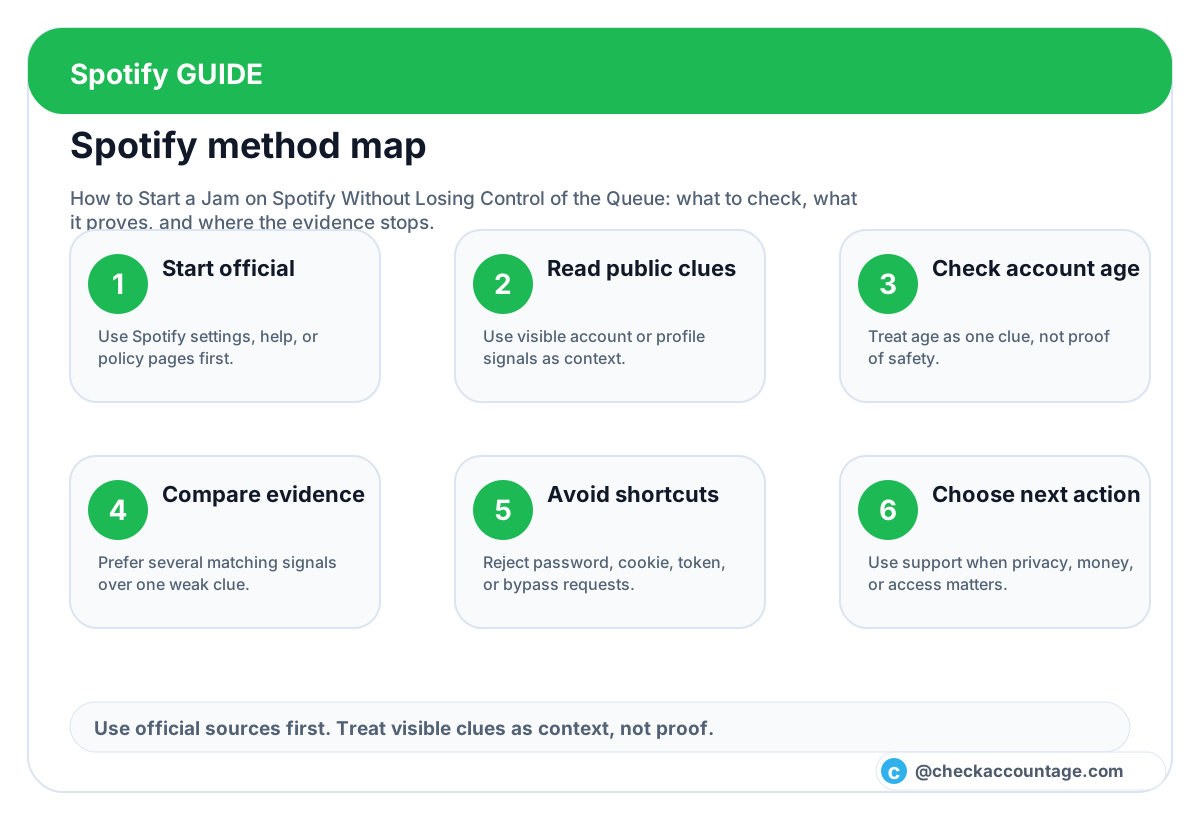
This guide treats how to start a Jam on Spotify as a practical user question, not a trick. The goal is to explain what Spotify actually supports, what public clues can show, and where you should stop before privacy, safety, account access, payment, or moderation rules are involved.
Key takeaways
- Use official Spotify help, settings, or policies for account, safety, payment, privacy, or moderation facts.
- Treat public clues as context, not proof of identity, intent, ownership, age, or trustworthiness.
- Do not use third-party tools that ask for passwords, recovery codes, cookies, private messages, or payment access.
Table of contents
- Quick answer for how to start a Jam on Spotify
- Official Spotify sources for how to start a Jam on Spotify
- How to handle how to start a Jam on Spotify safely
- how to start a Jam on Spotify mistakes and limits
- Safety and legal use
- how to start a Jam on Spotify FAQ
Quick answer for how to start a Jam on Spotify
To start a Spotify Jam, open a song or playlist in Spotify, use the device or session menu, choose Jam, then invite people with the available link, QR code, Bluetooth, or local sharing option. Keep control by watching who can add songs and ending the Jam when the shared listening session is over.
For current details, start with support.spotify.com and support.spotify.com. Competitor posts help reveal common questions and wording, but official sources should control claims about platform rules, privacy, payment, account access, and safety.
Official Spotify sources for how to start a Jam on Spotify
- https://support.spotify.com/us/article/jam/ — Spotify explains how Jam works and how listeners join.
- https://support.spotify.com/us/article/listening-together/ — Spotify documents listening together features and related account behavior.
A useful article should translate official documentation into plain language without adding fake certainty. If an official page is narrow, that is still valuable because it shows where the supported workflow ends and where speculation begins.
How to handle how to start a Jam on Spotify safely
Before you start a Spotify Jam
Make sure you are signed into the right Spotify account, using the current app, and comfortable with other people influencing the queue. A Jam is social listening, not a private playlist editor.
Before acting, label the evidence. Is it an official rule, a public profile clue, a visible setting, a checkout price, a chat behavior, or a third-party interpretation? That label keeps a small clue from turning into a risky assumption.
How Spotify Jam invitations work
Spotify can offer invite links, QR-style joining, Bluetooth or nearby-device flows depending on app version and device. Treat the invite like a room key: share it with people you actually want in the session.
Before acting, label the evidence. Is it an official rule, a public profile clue, a visible setting, a checkout price, a chat behavior, or a third-party interpretation? That label keeps a small clue from turning into a risky assumption.
How to manage the Jam queue
A good host watches the queue, removes accidental choices when needed, and explains the vibe. For group settings, set expectations before everyone starts adding tracks.
Before acting, label the evidence. Is it an official rule, a public profile clue, a visible setting, a checkout price, a chat behavior, or a third-party interpretation? That label keeps a small clue from turning into a risky assumption.
how to start a Jam on Spotify mistakes and limits
The first mistake is treating a convenient answer as a complete rule. Short tutorials often skip context because readers want speed, but account, privacy, moderation, and payment topics need boundaries. If the decision has consequences, check the current app or official help page before you act.
The second mistake is trying to reveal something the platform intentionally keeps private. Blocked status, hidden shares, account ownership, private messages, age verification, and moderation decisions often have limits for safety reasons. A good guide should explain those limits rather than promise secret access.
The third mistake is trusting a tool that asks for private credentials. A normal lookup, formatting guide, or account-age check should not require your password, two-factor code, recovery code, browser cookie, admin token, or payment details.
Safety and legal use
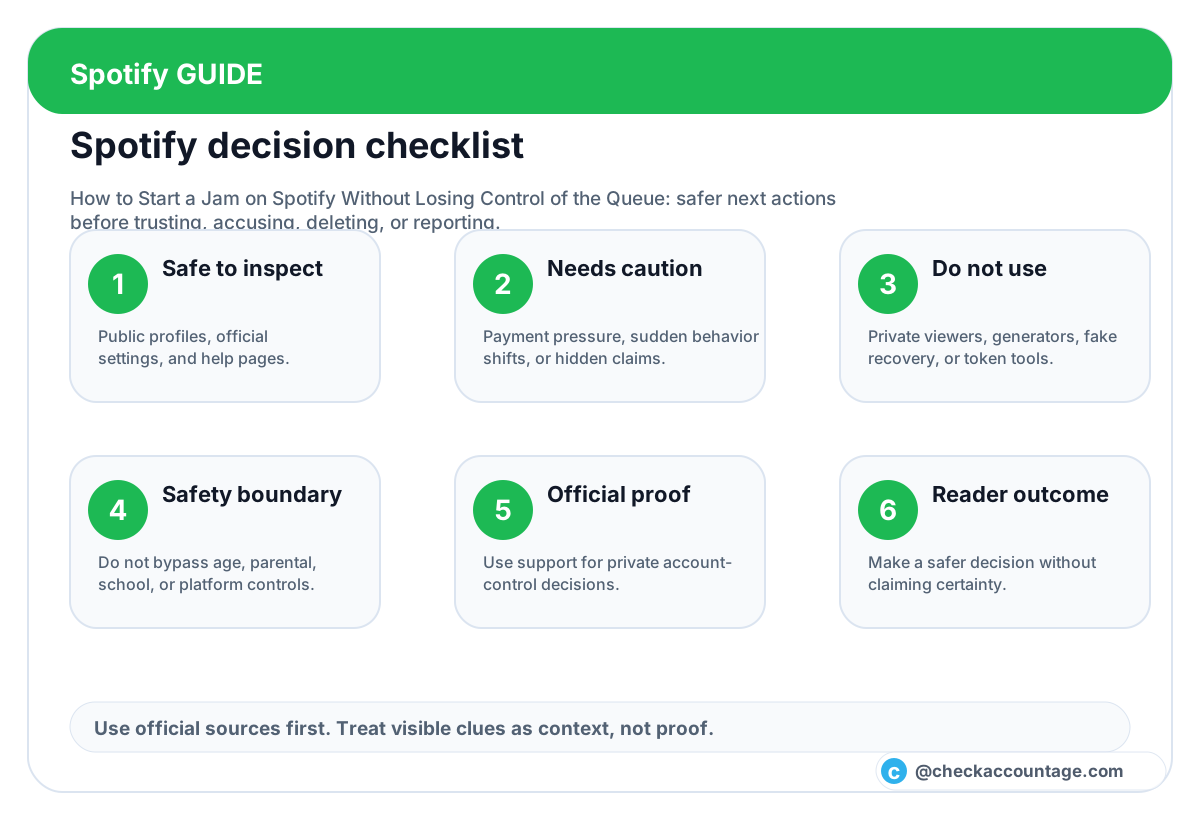
Use this Spotify guide only for accounts, profiles, messages, channels, posts, payments, or settings you own or are authorized to manage. Do not use these steps to bypass platform rules, age restrictions, parental controls, school controls, bans, identity checks, privacy settings, security checks, or payment limits. If a child, teen, workplace, school, shared device, or vulnerable user is involved, follow the platform's safety tools and local law rather than trying to hide activity or force access.
This article is for normal troubleshooting and safer decision-making. It does not provide instructions to access accounts you do not own, evade moderation, reveal private data, defeat verification, or pressure another user to share information.
how to start a Jam on Spotify comparison table
| Situation | Safer source | What not to assume |
|---|---|---|
| You need a current Spotify rule | Official help or in-app setting | That an old blog screenshot still applies |
| You see a public clue | Profile, message, post, or visible app state | That the clue proves private intent or identity |
| The issue involves money, age, privacy, or bans | Official support or policy | That a shortcut is safe just because it works technically |
| A tool asks for private access | Stop and leave | That passwords, cookies, or codes are normal for a lookup |
how to start a Jam on Spotify FAQ
Do guests need Spotify Premium for Jam?
Spotify's current rules can vary by feature and region, so check the official Jam help page in the app.
Can strangers join my Spotify Jam?
Only people who get the join path should be able to join, so avoid posting invite links publicly.
Can I remove someone from a Jam?
Use the host controls available in the app, and end the Jam if the session gets messy.
Can how to start a Jam on Spotify prove an account is safe or legitimate?
No. It can support a better decision, but trust depends on behavior, official records where available, direct context, and risk signals.
What should I do when how to start a Jam on Spotify advice conflicts?
Prefer official Spotify documentation for rules, privacy, safety, payment, account, or moderation claims. Use third-party guides for examples, not final authority.
Final checklist
- Answer the immediate how to start a Jam on Spotify question first.
- Check official Spotify sources before acting on sensitive claims.
- Keep private credentials and personal details out of third-party tools.
- Respect privacy, account ownership, and moderation boundaries.
- Use account age and visible clues as context, not as a final verdict.
For Spotify, the safest habit is to keep the answer useful but modest. A user can learn what a feature does, compare public clues, and decide on a next step without pretending that every private account fact is visible.
If the situation involves another person, slow down before turning a technical clue into a social conclusion. A missing message, unavailable profile, old account, or changed setting may have several explanations.
If the situation involves your own account, save the clean evidence first: dates, visible settings, support case numbers, receipts, screenshots, or the exact wording of an error. Good notes make official support easier to use.
If the situation involves a child, teen, workplace, school, or shared device, treat safety and consent as the main issue. The right answer is usually a platform setting or guardian workflow, not a workaround.
If a third-party page promises a hidden view, guaranteed payout, secret recovery path, or private account data, compare that claim with the official source. Stronger claims need stronger evidence.
For Spotify, the safest habit is to keep the answer useful but modest. A user can learn what a feature does, compare public clues, and decide on a next step without pretending that every private account fact is visible.
If the situation involves another person, slow down before turning a technical clue into a social conclusion. A missing message, unavailable profile, old account, or changed setting may have several explanations.
If the situation involves your own account, save the clean evidence first: dates, visible settings, support case numbers, receipts, screenshots, or the exact wording of an error. Good notes make official support easier to use.
If the situation involves a child, teen, workplace, school, or shared device, treat safety and consent as the main issue. The right answer is usually a platform setting or guardian workflow, not a workaround.
If a third-party page promises a hidden view, guaranteed payout, secret recovery path, or private account data, compare that claim with the official source. Stronger claims need stronger evidence.
For Spotify, the safest habit is to keep the answer useful but modest. A user can learn what a feature does, compare public clues, and decide on a next step without pretending that every private account fact is visible.
If the situation involves another person, slow down before turning a technical clue into a social conclusion. A missing message, unavailable profile, old account, or changed setting may have several explanations.